
Production Fit
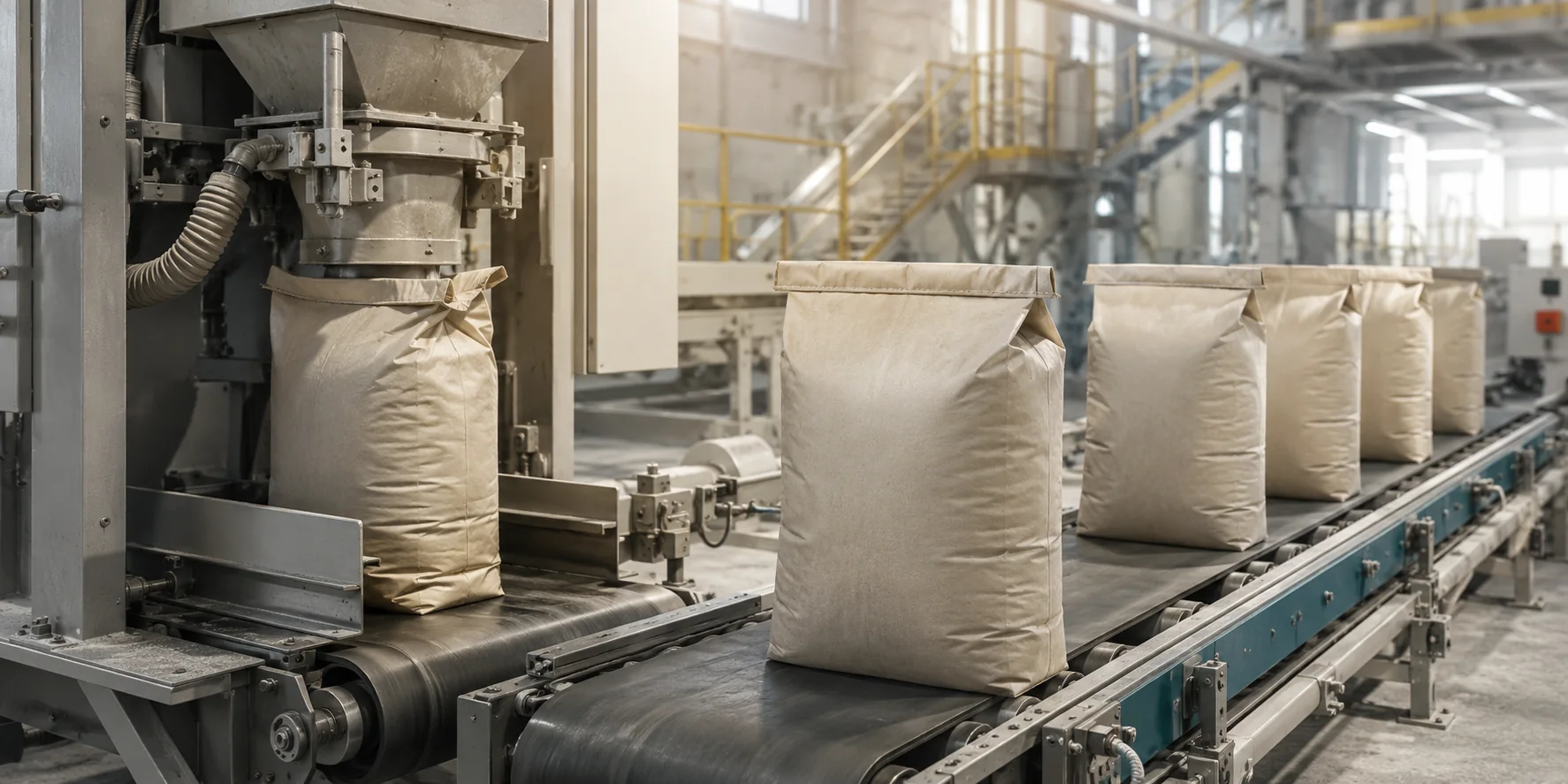
Cement packaging places heavy pressure on bag strength, valve sealing accuracy, moisture resistance, and filling cleanliness. In automated cement filling lines, a weak bottom fold or unstable valve position can create dust leakage, product loss, poor stack shape, and higher downstream handling costs.
LIGUOXING supports cement producers with a stable block bottom valve bag making route designed for laminated PP tubular fabric and heavy-duty woven packaging. The BVM-120 platform combines servo-controlled forming, hot-air welding, patch positioning, and online counting so finished bags can maintain reliable geometry from filling to palletizing.
Why It Fits
Strong block bottom shape improves upright filling, pallet stability, and warehouse handling.
Hot-air valve and bottom welding help reduce powder leakage during filling and transport.
Nano micro-perforation supports air release while helping prevent fine cement dust escape.
Servo-driven control supports repeatable bag length, bottom width, and valve position.
Packaging Requirements
A good cement bag must balance strength and filling speed. The fabric needs enough toughness for heavy product weight, the bottom must hold its shape during compression, and the valve must close cleanly after filling. For cement, clinker, dry mortar, tile adhesive, and related construction materials, even small sealing inconsistencies can become visible as dust, leakage, or rejected bags.
During project evaluation, LIGUOXING reviews the customer's material structure, valve patch design, bottom patch requirements, bag dimensions, target output, and filling machine compatibility. This helps match machine configuration to the actual production line instead of treating every cement project as the same standard bag.
Recommended Production Route
The BVM-120 line can be configured for high-volume cement valve bag production with double unwinding, stable web guiding, bottom forming, valve forming, hot-air welding, counting, and reject handling. For factories upgrading from older equipment, the focus is usually lower dust leakage, more consistent bag shape, faster specification adjustment, and fewer manual interventions around line-side inspection.
Quick responseChat on WhatsApp